
CELEBRITY
BREAKIMG: 🇩🇪 Former Chancellor of Germany, Angela Merkel: “Trump does not see politics as a service to the common good, but as a game of absolute power. I was surprised by his fascination with authoritarian leaders. He seemed to look at figures like Vladimir Putin or Kim Jong-un with a mix of envy and admiration—men who did not have to answer to parliaments, who did not face the scrutiny of a free press, or the constraints of an independent judicial system.”

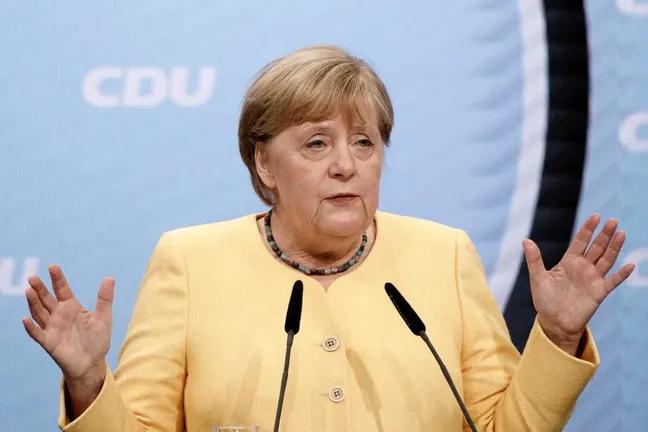
In her long-awaited political autobiography Freedom: Memoirs 1954-2021, Merkel offers open reflections on her years dealing with global leaders, including Trump and others with authoritarian reputations. The book was published at the end of 2024 and has generated worldwide discussion.
🧠 First Impressions and Diplomatic Style
Merkel writes that when she first met Trump in 2017 at the White House, she initially misjudged him:
She tried to respond to a famously awkward moment — when Trump avoided a handshake request — in a diplomatic way, but later realised it was a deliberate gesture meant to attract attention.
She found Trump’s approach to diplomacy different from hers, seeing interactions through a practical, transactional lens — which she links to his years as a real-estate developer.
🇷🇺 Fascination with Powerful Leaders
One recurring theme in Merkel’s memoir is her impression of how Trump spoke about and perceived other world leaders:
“He was clearly fascinated by the Russian president,” she writes, adding that in her experience, he was “captivated by politicians with autocratic and dictatorial traits.”
This doesn’t mean she claims Trump endorsed dictators, but that he seemed intrigued by the power they held — especially figures like Vladimir Putin — who don’t have to answer to parliaments or independent courts.
In a related interview with CNN, Merkel also told interviewer Christiane Amanpour that Trump’s comments about these leaders reflected “a fascination with the sheer power” they could exert, at times suggesting he wished he could override democratic checks and balances such as parliaments.
🌍 Views on Competition, Cooperation, and Democracy
In her memoir, Merkel contrasts her own governing philosophy with what she saw in Trump’s style:
She said Trump tended to think of international relations in zero-sum terms: if one country wins, another loses.
By contrast, Merkel has long emphasised multilateral cooperation — the idea that agreements between nations can bring shared benefits.
She also expresses concern for democratic norms and institutions, suggesting that Trump’s admiration for decisive leaders posed a challenge in a democratic context.
🗳️ Democratic Values vs. Personal Style
Although Merkel served with Trump and dealt with him as German Chancellor for four years, she has been frank about their differences in political values:
In conversation and in writing, she notes how Trump’s approaches to rule-making and power differed from the democratic norms she defended throughout her own leadership.
The memoir also expresses her personal hope for a different leadership outcome in later U.S. elections — something rare for a former leader to state so openly.

(🚨) BREAKING NEWS: Trump Broadcasts to Entire World Exactly When and Where U.S. Will Strike in Iran Next, Endangering U.S. Pilots; Unclear If Any Prior U.S. President Has Ever Intentionally Endangered American Lives in This Way Just to Be Macho and Feel Like a Big Man

After bulldozing the East Wing of the White House, the Trump administration is now considering a plan to remove the famous 200-year-old columns in front of the White House and replace them with something Trump likes more. All this while the nation is at war with Iran, gas prices are soaring, grocery prices are climbing, layoffs are rising, and millions of Americans don’t have health care coverage.

JUST IN: Trump threatens to delay his visit to China if Beijing refuses to join the Hormuz Strait escort. Frankly, China couldn’t care less whether he visits or not — TRUMP HAS NO CARDS!! It’s Trump who needs China, not the other way around. Likewise, he’s bullying NATO allies. The truth is the US needs NATO allies far more than its allies need the US now. TRUMP, YOU HAVE NO CARDS!!
BREAKING: Former U.S. President Barack Obama has sparked debate after warning that former President Donald Trump may be pushing the United States toward a dangerous military confrontation with Iran—a conflict that several past presidents deliberately avoided.

🚨 BREAKING: Israel just dropped a quiet bomb on Washington. Reports reveal Israel told the US their missile defense is running on empty amid the Iran war. When the Iron Dome runs out of ammo, what happens next? 👀

Just in: In a newest decision, the U.S. Supreme Court has ruled that Donald Trump does not enjoy absolute immunity in the Jeffrey Epstein case. This resolution clears the way for the President to be formally subpoenaed, marking a historic precedent in 2026

Can’t wait to meet you, little one. Taylor Swift says as she is expecting her first child.

EXCLUSIVE: We are having a baby, Global pop icon Taylor Swift confirms pregnancy rumours. Full story in the link below 👇🏾👇🏾👇🏾

Breaking: A “double impeachment” is being prepared that could change the course of the U.S. In 2026. Do you support starting impeachment proceedings against Trump and Vance? Full story in the link below 👇🏾👇🏾

BREAKING: 🇺🇸 Former U.S. Vice President, Kamala Harris: “We are witnessing the massive abandonment of American ideals. Launching missiles without a plan for what comes next is putting a target on the back of every American in the region. We will not allow ourselves to be divided while they drag the country into a constitutional crisis and an endless global conflict. Those in power today count on fear being contagious… but courage is contagious too.”

🚨 BREAKING: Senate Democrats just blocked a bill to reopen the Department of Homeland Security as the U.S. faces rising terror threats, 51–46. Sen. John Fetterman was one of the only Democrats to vote YES with Republicans. Meanwhile TSA workers are going without pay, hundreds are calling out or quitting, and airport lines are turning chaotic. At some point Republicans need to stop letting shutdown politics drag on.
