
CELEBRITY
BREAKING: 🇨🇳 Chinese Ministry of Defense Spokesperson, Wu Qian: “The United States is a war addict. Throughout its more than 240-year history, it has been at war for all but 16 years. The U.S. has 800 overseas military bases across more than 80 countries and regions. The United States is the main cause of international disorder, global turbulence, and regional instability.”

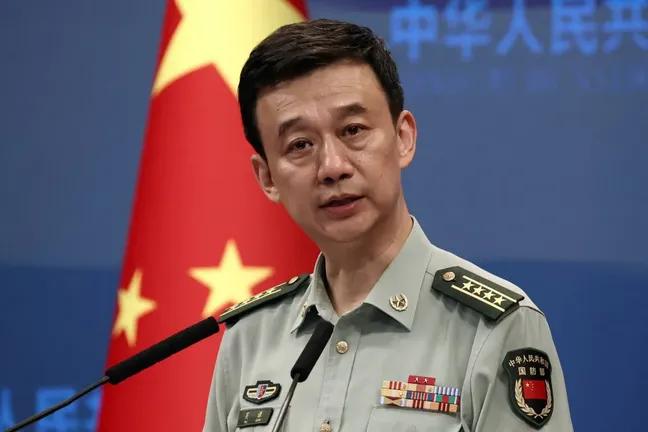
China has sharply criticized the United States’ global military role, with Chinese Defense Ministry spokesperson Wu Qian accusing the U.S. of being a “war addict” and a major source of global instability.
The remarks come amid heightened geopolitical tensions, particularly around conflicts in the Middle East and ongoing rivalry between Beijing and Washington.
China Accuses U.S. of Being a “War Addict”
At a press briefing in Beijing, Wu Qian said the United States has been involved in wars for most of its history and maintains a massive global military presence. He argued that this record shows Washington is a major driver of international instability.
Wu stated that in the more than 240-year history of the United States, the country has been at war for all but about 16 years. He also pointed out that the U.S. maintains over 800 overseas military bases in more than 80 countries and regions, which he described as evidence of its extensive global military reach.
According to Wu, this military presence has contributed to conflicts in various regions, from the Middle East to Europe. He argued that wherever the U.S. military operates, it often leads to instability and suffering for local populations.
The remarks reflect the broader geopolitical rivalry between the United States and China. Both countries have frequently criticized each other’s military activities and strategic intentions.
China says its defense policy is “defensive in nature” and claims it has not initiated wars since the founding of the People’s Republic of China in 1949. In contrast, Beijing argues that U.S. interventions abroad demonstrate an “addiction to war.”
However, Washington and its allies often counter that the U.S. military presence overseas helps maintain global security, protect allies, and deter conflicts.
Wu Qian’s comments highlight growing tensions between the world’s two largest powers. The exchange of accusations reflects deeper disputes over:
U.S. military alliances and overseas bases
China’s rising military power
Conflicts in regions such as the Middle East and the Taiwan Strait
As competition between Beijing and Washington intensifies, statements like these illustrate the increasingly sharp rhetoric shaping global geopolitics.

🚨 BREAKING: Senate Democrats just blocked a bill to reopen the Department of Homeland Security as the U.S. faces rising terror threats, 51–46. Sen. John Fetterman was one of the only Democrats to vote YES with Republicans. Meanwhile TSA workers are going without pay, hundreds are calling out or quitting, and airport lines are turning chaotic. At some point Republicans need to stop letting shutdown politics drag on.

JUST IN: JD Vance alleges $19 billion in fraud was discovered in Minneapolis, and the Trump administration may target California for its next major federal investigation.

BREAKING: 🇨🇳 Chinese Ministry of Defense Spokesperson, Wu Qian: “The United States is a war addict. Throughout its more than 240-year history, it has been at war for all but 16 years. The U.S. has 800 overseas military bases across more than 80 countries and regions. The United States is the main cause of international disorder, global turbulence, and regional instability.”

BREAKING: 🇮🇷 Supreme Leader of Iran, Mojtaba Khamenei: “The enemy believes that by assassinating our leaders it will stop us. They are mistaken. If the attacks continue, no asset of the U.S. or its allies in the region will be safe. Since we cannot reach American soil directly, we will strike their bases, their facilities, and all those who have allowed their territory to be used to attack us. This will be a prolonged war; we have the capacity to fight for years. There will be no surrender.”

U.S. at Fault in Strike on School in Iran, Preliminary Inquiry Says Outdated targeting data may have resulted in a mistaken missile strike, according to the ongoing military investigation, which undercuts President Trump’s assertion that Iran could be to blame.

The Nobel Peace Prize has been revoked. He is barred for life and that is what is called karma for Donald Trump. Raise your hand if you agree Trump is the worst President in US history ✋

JUST IN: Canada just told trump: we’re not joining your war. full stop. maga republicans are beating the war drums and lindsey graham is already counting his money, canada’s pm stood up in parliamentand said “we will never participate.”
🚨 JUST IN: The U.S. Supreme Court rules Donald Trump does not have full immunity and may face a subpoena in the Epstein case, following Bill Clinton’s testimony

Global trial? Calls are mounting to bring Donald Trump and Pete Hegseth before The Hague for alleged war crimes. The offensive in Iran Sparks an international legal storm this early March 2026. Do you support prosecuting Trump and his Defense Secretary as war criminals in International Court?

WASHINGTON, D.C. — U.S. President Donald Trump has appointed Erika Kirk, the widow of conservative activist Charlie Kirk, to serve on the U.S. Air Force Academy Board of Visitors, a federal advisory body that oversees the academy.

As war rages in the Middle East, gas prices skyrocket, and jobs disappear, Donald Trump is golfing. This is an insult to the American Presidency and American people. Raise your hand if you agree that Trump should be impeached.🤚 And Let’s be friends💙
