
CELEBRITY
🚨 JUST IN: Governor Gavin Newsom is calling for Donald Trump to issue immediate tariff refund checks — with interest — following today’s Supreme Court ruling! Raise your hand if you want Trump impeached immediately ✋

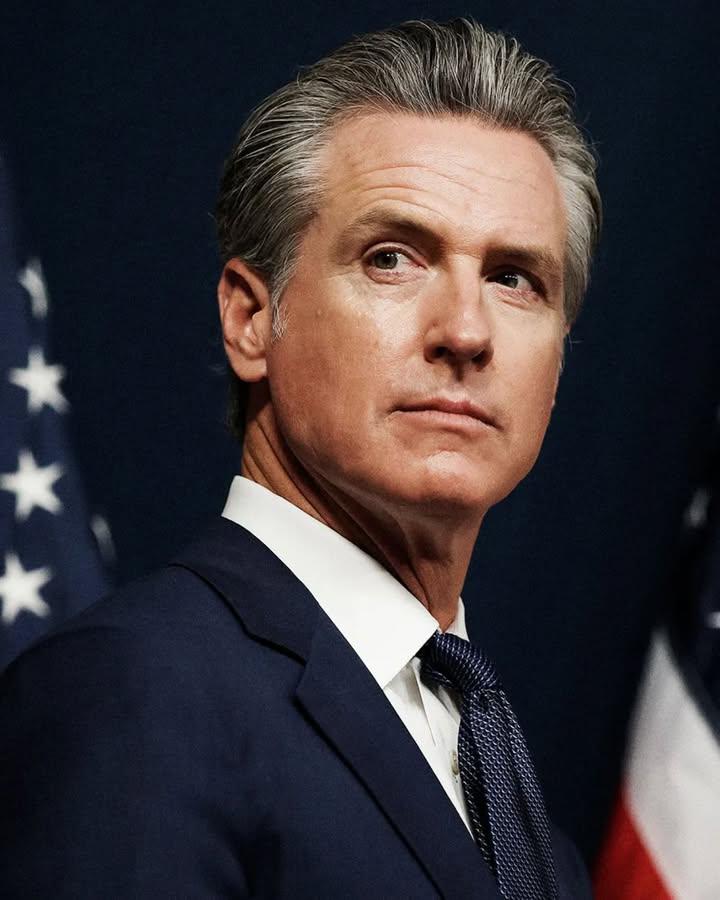
In a landmark decision on February 20, 2026, the Supreme Court of the United States ruled 6–3 that President Donald Trump exceeded his legal authority by imposing sweeping global tariffs under emergency powers without approval from Congress. These tariffs, which had applied broadly to imports and raised billions in revenue for the government, were declared illegal because the statute the administration used — the International Emergency Economic Powers Act — does not give a president unilateral taxing power.
The decision marked a historic rebuke of one of the administration’s signature economic policies, and the court sent the case back to lower courts to determine if importers should receive refunds for the duties they paid.
Governor Newsom Calls for Refund Checks with Interest
Gavin Newsom, governor of California and a high-profile critic of the tariffs, responded forcefully to the ruling. He urged the Trump administration to immediately issue refund checks — “with interest” — to American families and businesses that paid the tariffs, saying the duties amounted to an “illegal cash grab” that hurt consumers and working families.
Newsom said that more than $130 billion in tariff revenue was collected under the now-invalid tariffs, and that much of the cost had been passed on to consumers in the form of higher prices at stores and on everyday goods.
Supporters of refund efforts argue that businesses and individuals deserve compensation for payments they made under a policy the Supreme Court has now declared unlawful.
President Trump reacted to the decision by announcing a temporary 10 % global tariff under a different legal authority and criticized the Supreme Court’s ruling as “deeply disappointing,” promising the administration would pursue other statutory avenues to maintain trade protections.
However, the Supreme Court’s decision clearly limited executive power in setting broad import tariffs without explicit congressional approval — a key constitutional principle about taxation and trade.
The ruling did not itself order refunds, and how billions in previously collected duties might be returned — and to whom — is now a matter likely to be resolved in lower courts or through further legal and political action. Industry groups are already pushing for quick reimbursement processes, arguing refunds would give a boost to small businesses and help reinvest in growth. �
At the same time, the decision has triggered broader discussions on constitutional limits on presidential power and the role of Congress in setting taxes and trade policy — debates that are likely to continue in Washington and the courts

🚨 BREAKING: Senate Democrats just blocked a bill to reopen the Department of Homeland Security as the U.S. faces rising terror threats, 51–46. Sen. John Fetterman was one of the only Democrats to vote YES with Republicans. Meanwhile TSA workers are going without pay, hundreds are calling out or quitting, and airport lines are turning chaotic. At some point Republicans need to stop letting shutdown politics drag on.

JUST IN: JD Vance alleges $19 billion in fraud was discovered in Minneapolis, and the Trump administration may target California for its next major federal investigation.

BREAKING: 🇨🇳 Chinese Ministry of Defense Spokesperson, Wu Qian: “The United States is a war addict. Throughout its more than 240-year history, it has been at war for all but 16 years. The U.S. has 800 overseas military bases across more than 80 countries and regions. The United States is the main cause of international disorder, global turbulence, and regional instability.”

BREAKING: 🇮🇷 Supreme Leader of Iran, Mojtaba Khamenei: “The enemy believes that by assassinating our leaders it will stop us. They are mistaken. If the attacks continue, no asset of the U.S. or its allies in the region will be safe. Since we cannot reach American soil directly, we will strike their bases, their facilities, and all those who have allowed their territory to be used to attack us. This will be a prolonged war; we have the capacity to fight for years. There will be no surrender.”

U.S. at Fault in Strike on School in Iran, Preliminary Inquiry Says Outdated targeting data may have resulted in a mistaken missile strike, according to the ongoing military investigation, which undercuts President Trump’s assertion that Iran could be to blame.

The Nobel Peace Prize has been revoked. He is barred for life and that is what is called karma for Donald Trump. Raise your hand if you agree Trump is the worst President in US history ✋

JUST IN: Canada just told trump: we’re not joining your war. full stop. maga republicans are beating the war drums and lindsey graham is already counting his money, canada’s pm stood up in parliamentand said “we will never participate.”
🚨 JUST IN: The U.S. Supreme Court rules Donald Trump does not have full immunity and may face a subpoena in the Epstein case, following Bill Clinton’s testimony

Global trial? Calls are mounting to bring Donald Trump and Pete Hegseth before The Hague for alleged war crimes. The offensive in Iran Sparks an international legal storm this early March 2026. Do you support prosecuting Trump and his Defense Secretary as war criminals in International Court?

WASHINGTON, D.C. — U.S. President Donald Trump has appointed Erika Kirk, the widow of conservative activist Charlie Kirk, to serve on the U.S. Air Force Academy Board of Visitors, a federal advisory body that oversees the academy.

As war rages in the Middle East, gas prices skyrocket, and jobs disappear, Donald Trump is golfing. This is an insult to the American Presidency and American people. Raise your hand if you agree that Trump should be impeached.🤚 And Let’s be friends💙
